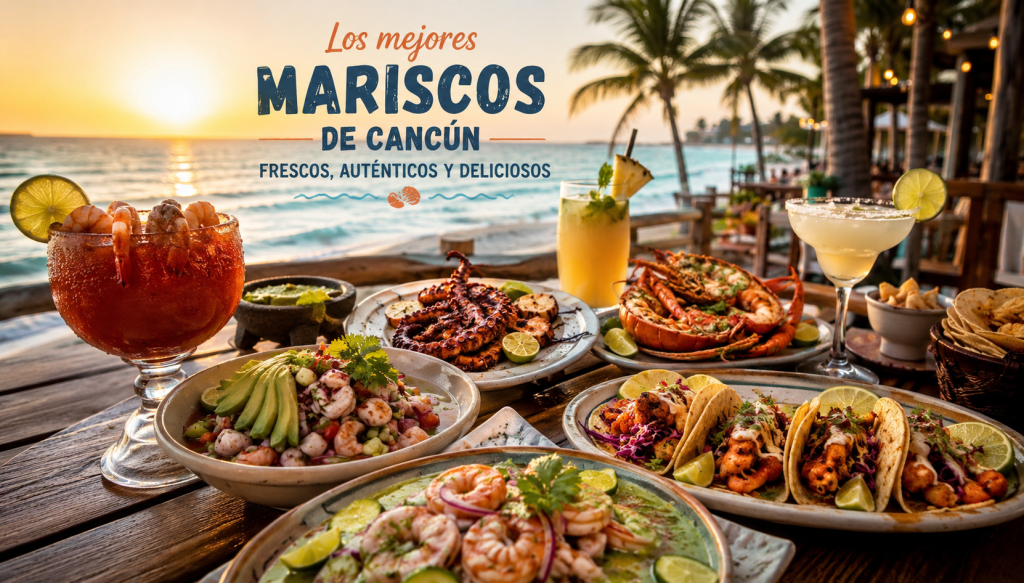
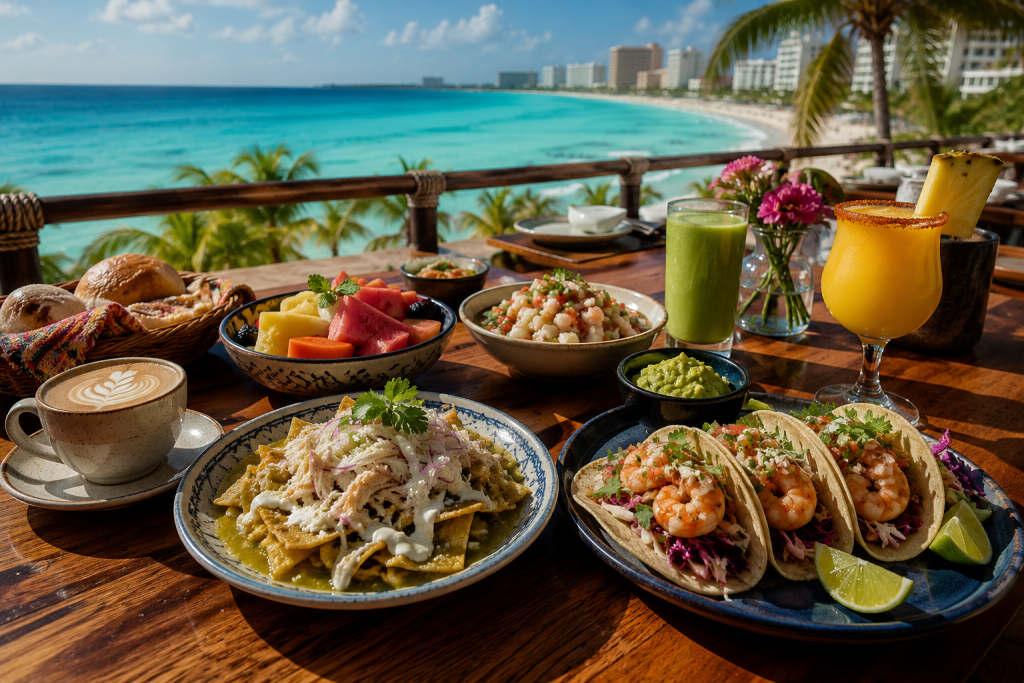
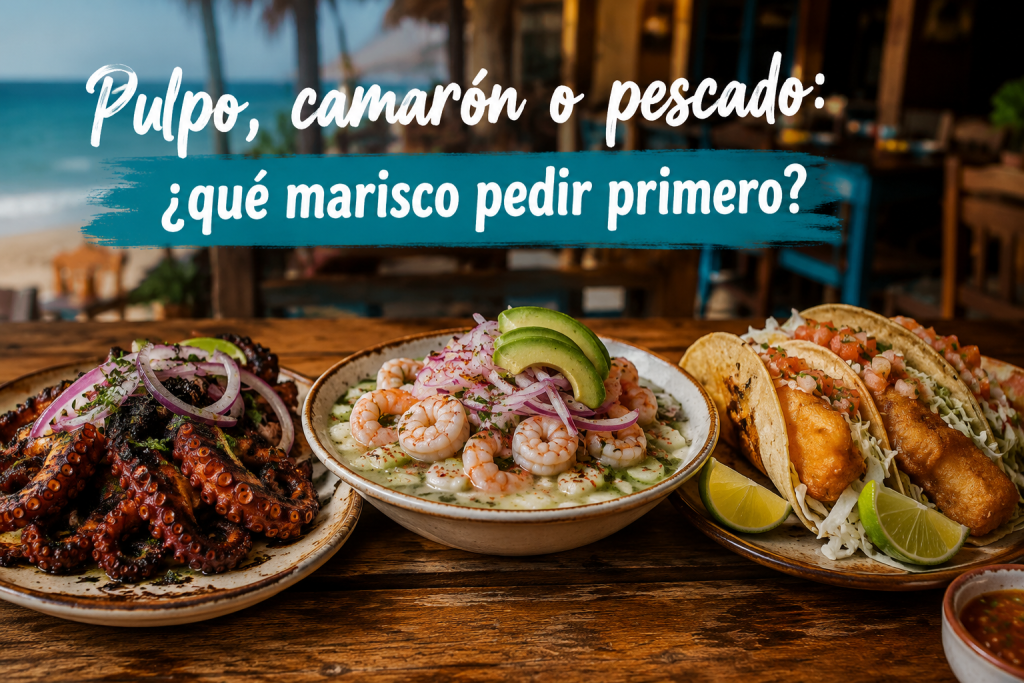
When someone visits a seafood restaurant in Mexico, especially in coastal destinations like Cancun, there are two dishes that usually attract a lot of attention: the aguachile and the ceviche. At first glance they may seem very similar, since both are prepared with fresh seafood, lemon and vegetables. However, its flavor, texture, preparation and intensity are very different.
Many people who try seafood for the first time do not know which one to choose or even think that they are the same with a different name. The reality is that Aguachile and Ceviche have their own identity and offer different experiences at the table.
In this guide we explain what Aguachile is, where it comes from, how it is prepared and how it differs from ceviche, so that the next time you are in front of the menu you know exactly what to order.
What is Aguachile?
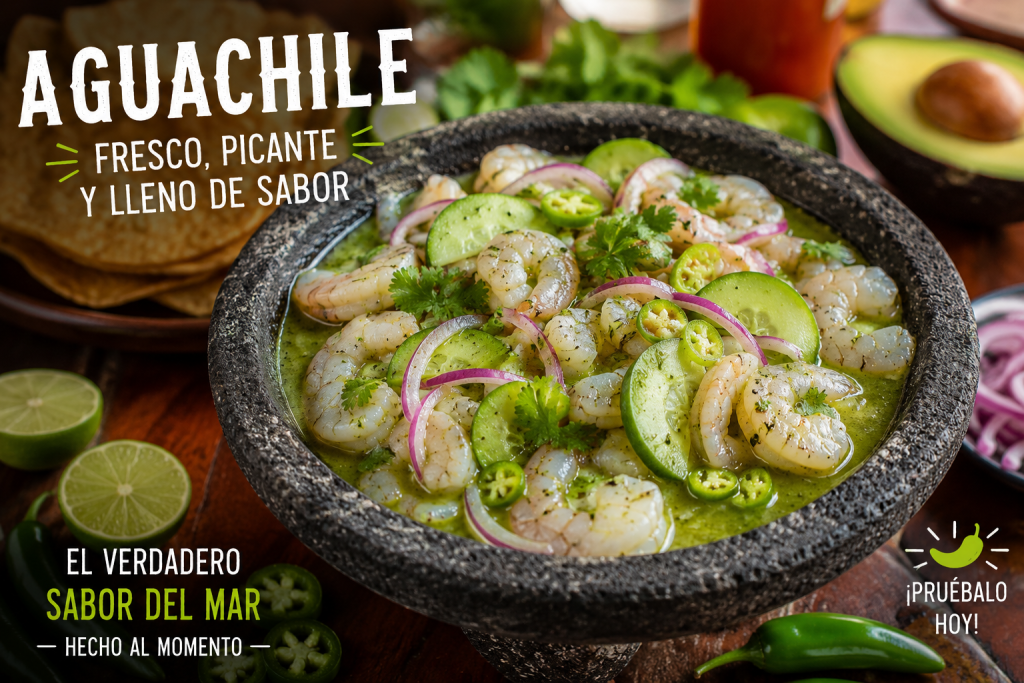
Aguachile is a traditional Mexican dish prepared mainly with fresh shrimp, lemon juice, chili and fresh vegetables. It is characterized by its intense, acid, spicy and very fresh flavor, which makes it a favorite for those who enjoy seafood with a strong personality.
Unlike other softer seafood dishes, the Aguachile has a much more direct flavor profile. From the first bite you can feel the impact of the lemon, the chili pepper and the freshness of the seafood.
In addition to being very popular on the Mexican coast, the Aguachile has also become an essential option in modern restaurants and seafood restaurants due to its vibrant flavor and its striking presentation.
Origin of the aguachile
Aguachile has its roots in northwestern Mexico, especially in the state of Sinaloa, a region widely recognized for its culinary tradition based on fresh seafood.
Originally, this dish was prepared in a much simpler way, with water, chili and some fresh ingredients. Over time it evolved to become the version we know today: a mixture of lemon, fresh chili, shrimp and vegetables, served almost always at the moment.
Its popularity has grown so much that it is now common to find different versions in many tourist cities and coastal areas, including Cancun, where it is part of the favorite menu of locals and visitors.
Main ingredients of Aguachile
Although there may be variations depending on the recipe or the restaurant, the most common ingredients of aguachile are:
- Fresh shrimp
- Lemon juice
- serrano chile or green chile
- Cucumber
- Purple onion
- Coriander
- Salt and pepper
In some versions, ingredients such as:
- Avocado
- Mango
- Black Chile
- Special green sauce
- Toast or crackers to accompany
The key to Aguachile is that the ingredients feel fresh, light and well balanced, although with a spicy touch much more marked than other seafood dishes.
How is Aguachile prepared?
One of the things that makes Aguachile special is that it is usually prepared at the moment. This helps preserve the freshness of the shrimp and maintain the intensity of its flavors.
The general process is usually the following:
- Shrimp is cleaned
It is peeled, deveined and in many cases it opens in the form of a butterfly to better absorb the flavor. - It is marinated with lemon
The shrimp is placed in lemon juice for a short time. This gives you that characteristic color and texture. - The sauce is prepared
Ingredients such as chili, lemon, coriander, salt and sometimes cucumber or special condiments are blended or mixed. - Fresh vegetables are added
Usually purple onion and finely sliced cucumber. - It is served immediately
The aguachile is usually enjoyed fresh, freshly prepared, to make the most of its flavor and texture.
This quick preparation is one of the reasons why Aguachile has such a different personality than ceviche.
What is ceviche?
Ceviche is another very popular dish made with seafood or fish marinated in lemon, mixed with fresh vegetables and, in some cases, additional ingredients such as tomato, avocado or sauces.
It is widely known throughout Latin America, although in Mexico it has a very particular style. In many Mexican coastal areas, ceviche is prepared with a fresher, more colorful and balanced approach.
Unlike Aguachile, ceviche usually has a wider combination of ingredients, giving it a smoother, juicy and balanced flavor.
Common ingredients of ceviche
The most common ingredients of Mexican ceviche include:
- fish or shrimp
- Lemon juice
- Tomato
- Onion
- Cucumber
- Coriander
- Avocado (optional)
Some versions also add:
- ketchup sauce
- Hot sauce
- CLAMATO
- Mango or tropical fruits
- Octopus or mixed seafood
This makes the ceviche have a more mixed presentation and, in many cases, a softer and more accessible flavor for those who are not used to intense spiciness.
Difference Between Aguachile and Ceviche
Although both dishes share ingredients such as seafood, lemon and fresh vegetables, the difference between aguachile and ceviche is in several important aspects.
1. Difference in flavor
The first big difference is in the taste.
Aguachile
- more intense
- more acidic
- much spicier
- More straight to the palate
Ceviche
- more balanced
- softer
- less spicy
- Easier for those who try seafood for the first time
If you like strong flavors, the aguachile will probably be your favorite. If you prefer something fresh but more friendly to taste, ceviche is usually a better option.
2. Difference in preparation
Another key difference is the way they are prepared.
Aguachile
It is usually prepared at the moment and is served very fresh, with a citrus and spicy sauce that immediately stands out.
Ceviche
It is usually allowed to marinate longer and mix more ingredients, which makes the flavors integrate more evenly.
In simple words:
- The aguachile feels cooler and more explosive.
- Ceviche feels more marinated and balanced.
3. Difference in spicy
If there is something that really distinguishes Aguachile from ceviche, it is the spicy level.
Aguachile is usually spicier.
This is because he uses fresh chili as the protagonist of the preparation.
Ceviche is usually softer.
Although some recipes have hot sauce, usually the spicy does not dominate the dish.
Therefore, if anyone asks:
Which one more snacks, the aguachile or the ceviche?
The answer is usually clear:
Aguachile almost always bites more than ceviche.
4. Difference in texture
The texture also changes a lot between both saucers.
Aguachile
- firmer shrimp
- cooler feeling
- less mixed
- cleaner to the palate
Ceviche
- Juicier texture
- more integrated ingredients
- Softer and more marinated feeling
This greatly influences the overall experience by eating them.
5. Difference in ingredients
Although they can share several elements, each one has a different approach.
Aguachile
It focuses more on:
- Shrimp
- Lemon
- Chili
- Cucumber
- Onion
Ceviche
It usually includes:
- more vegetables
- More mix of flavors
- Options with tomato, avocado and sauces
In other words:
The aguachile is simpler but more intense.
Ceviche is more complete and more balanced.
Comparative table: Aguachile vs Ceviche
Aguachile
- Taste: Intense and acidic
- Spicy: high
- Preparation: Quick and on the spot
- Ingredients: Simpler
- Texture: Firm and fresh
- Ideal for: those who love spicy
Ceviche
- Taste: fresh and balanced
- Spicy: low to medium
- Preparation: More marinade
- Ingredients: More varied
- Texture: soft and juicy
- Ideal for: Those looking for something softer
What is better to order: Aguachile or Ceviche?
The answer depends entirely on your taste.
Choose Aguachile if:
- you like spicy
- You prefer intense flavors
- You want to try something more traditional and daring
- You love seafood with lemon and chili
Choose Ceviche if:
- you prefer something softer
- It’s your first time trying fresh seafood
- Do you like balanced flavors?
- You want a lighter and easier to share option
Both are great options, but each offers a different experience.
Aguachile and Ceviche in Cancun
In Cancun, both Aguachile and Ceviche are very popular options in seafood and seafood restaurants. This is because the warm climate and the proximity to the sea make these dishes ideal to enjoy fresh, light and full of flavor.
Among the most common options you can find are:
- Green aguachile
- Black aguachile
- Shrimp aguachile
- Fish ceviche
- Shrimp ceviche
- Mixed Ceviche
For tourists and locals, both dishes represent a delicious way to enjoy Mexican marine cuisine.
Tips to recognize a good aguachile or ceviche
If you want to really enjoy these dishes, it is worth noting some important details:
- Seafood must look fresh
Color, texture and smell are key. - Lemon should not overshadow everything
It must enhance the flavor, not hide it. - Ingredients must be balanced
Neither too spicy nor too acidic. - The presentation should look clean and fresh
Especially in dishes that depend both on the quality of the product. - The ideal is to choose specialized places in seafood
A good seafood restaurant usually makes a big difference in flavor and freshness.
Conclusion
now that you know What is Aguachile and How it differs from ceviche, it is much easier to understand why both are so popular and why they should not be confused.
Although they share ingredients Like fresh seafood, lemon and vegetables, the experience they offer is different:
The aguachile is more spicy, intense and direct.
Ceviche is softer, more balanced and versatile.
None is ‘better’ than the other. It all depends on what you are looking for at the time.
If you like strong, character-filled flavors, Aguachile can become one of your favorites. If you prefer something cooler, lighter and palate friendly, ceviche will surely be a great choice.
And if you are in a good seafood restaurant, the best idea can be very simple:
Try both and find out which one wins you the most.
Frequently Asked Questions
Are aguachile and ceviche the same?
No. Although both have seafood and lemon, the aguachile is usually spicier and more intense, while the ceviche is softer and more balanced.
What’s more spicy, aguachile or ceviche?
Normally, aguachile has much more spicy than ceviche.
Does Aguachile always carry shrimp?
Not always, but shrimp is one of the most popular versions.
Is ceviche better for beginners?
Yes, ceviche is often a more friendly option for those who try fresh seafood for the first time.
What is more typical in a Mexican seafood restaurant?
Both are very typical, especially in coastal and tourist areas.